Welding is a widely used process in manufacturing companies, enabling the joining of metals and plastics. However, it is physically demanding for operators and can pose safety risks. These tasks can be greatly improved with the use of welding robots. We can design dedicated robotic welding stations tailored to your company’s needs and implement them directly within your production facility.

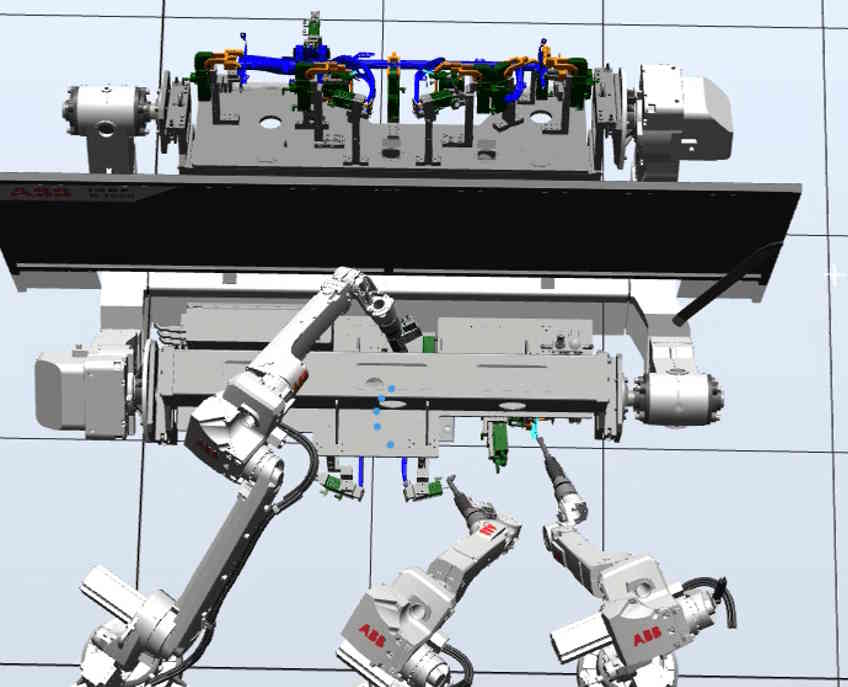
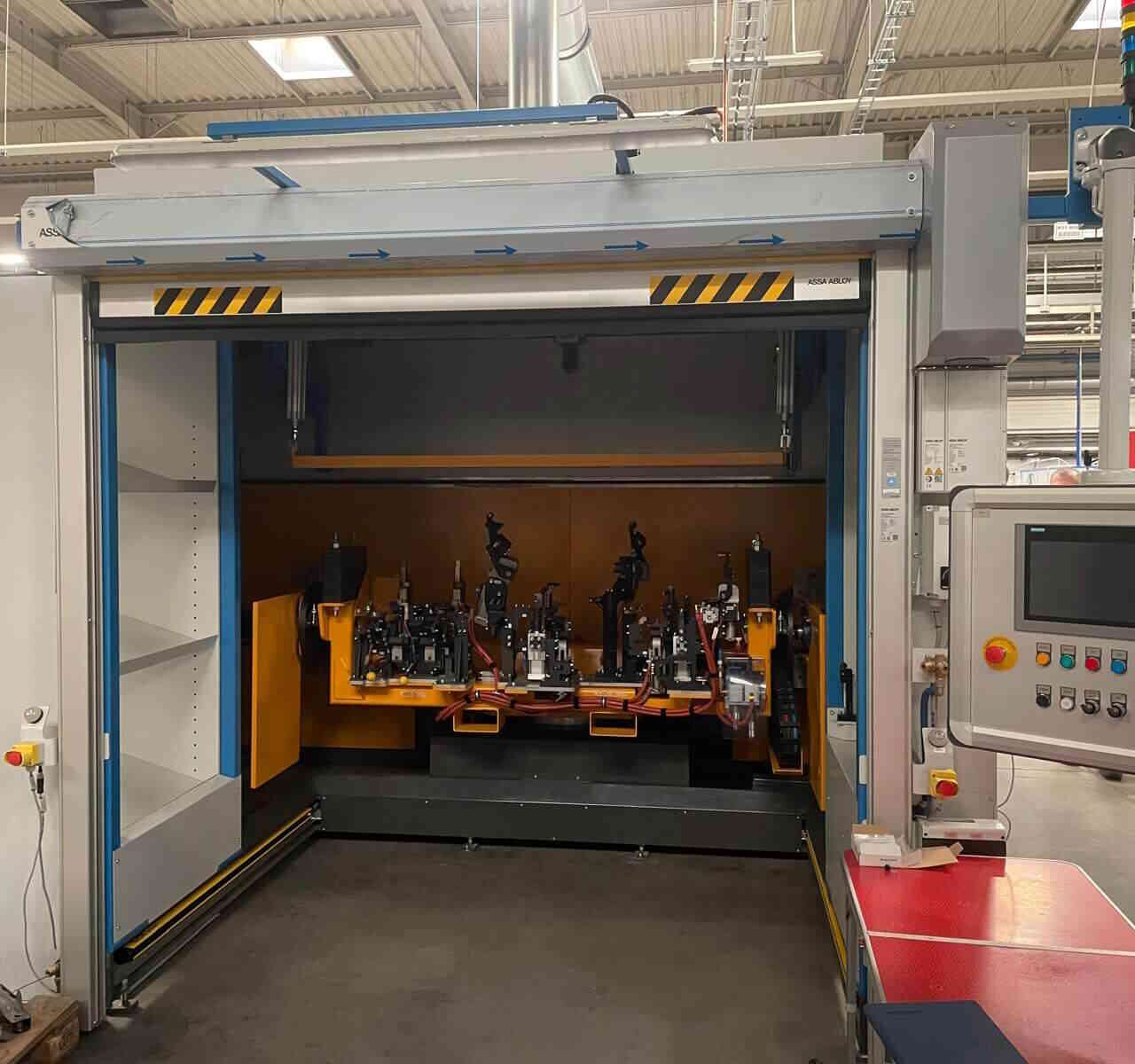
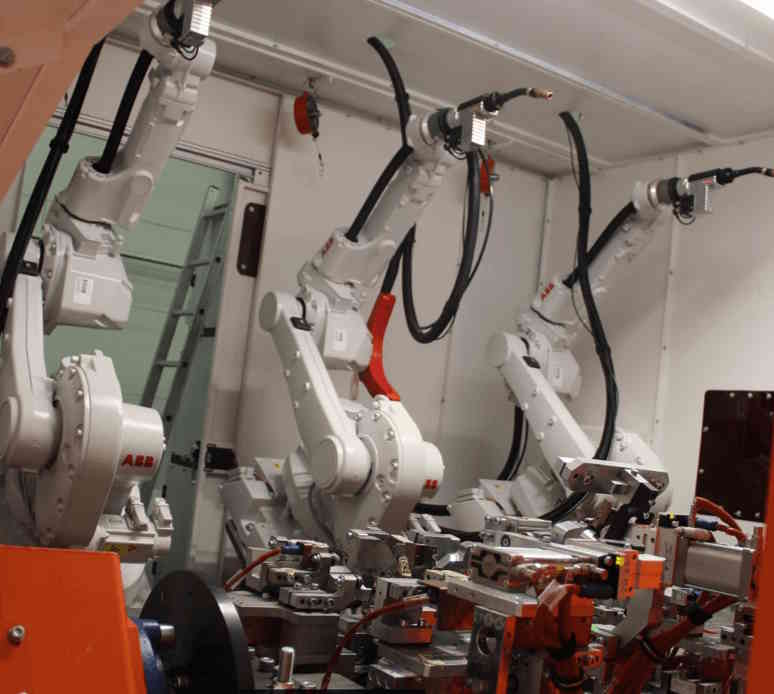
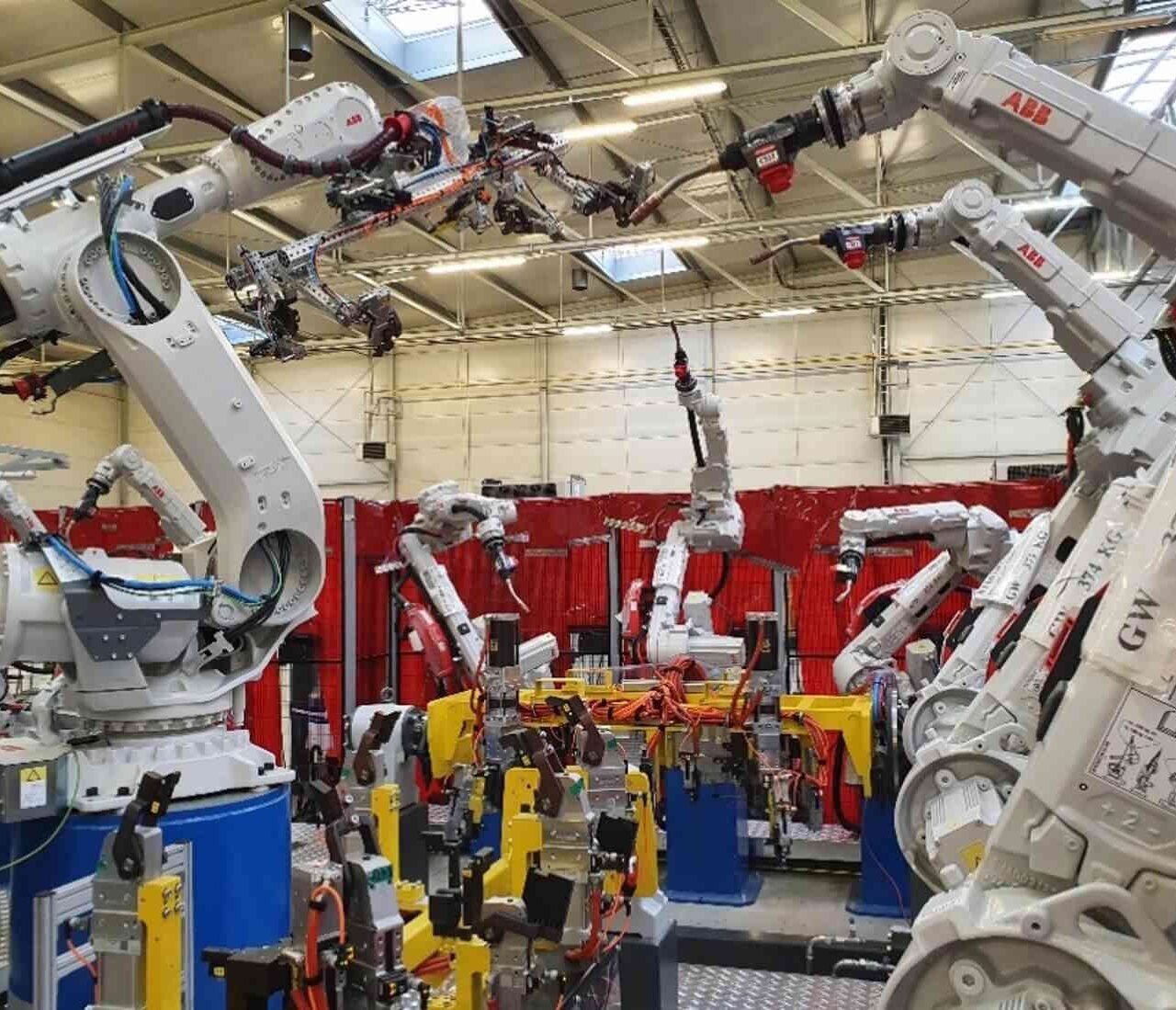
We are a company that has specialized in production robotization for many years. By implementing modern manufacturing methods, operations within an enterprise can be carried out faster, more efficiently, more safely, and at a higher quality level. One of the most commonly automated processes on production lines is welding. The machine that enables this process is a welding robot — an automated workstation designed for precise welding operations.
It can be programmed according to individual requirements and used for a wide range of welding tasks — from the simplest to the most complex. A machine performing robotized welding is equipped with, among other things, vision systems that ensure consistently high-quality work. Welding robots can create joints using spot, laser, arc, TIG, or MIG methods, and are also fitted with cleaning components. By integrating several devices, the robotization of welding processes can reach an even higher level through the implementation of a welding cell. This cell is equipped with manipulators that adjust the position of the workpiece during welding. Protective walls safeguard the surroundings and increase the safety of employees.
Welding robotization is a process that enhances both the efficiency and quality of production across various industries. It is widely used by manufacturing companies in sectors such as automotive, heavy industry, construction, electronics, and household appliances (AGD). Taskoprojekt S.A. can implement production robotization for your company, including the integration of industrial welding robots tailored to your specific operational needs.
Robotic welding is increasingly being incorporated into both newly designed and existing production lines. Among the key advantages of a welding robot are its ability to deliver high quality combined with consistent repeatability. Welding performed manually can never achieve the same level of speed while maintaining uniform quality. By implementing robotic systems, it is possible to eliminate errors and the resulting downtimes that often occur in production processes relying entirely on human labor. This leads to improved production quality, a reduction in the number of complaints, and consequently, tangible financial benefits for the company. Businesses also save money by optimizing costs, speeding up production, and reducing expenses associated with training new welding operators.
A robotic welding station is an opportunity not only for the company as a whole but also for its employees. Workers can enhance their qualifications and take on new roles, such as supervising the operation of welding robots. Another important advantage is that robotic welding is much safer than manual welding. The profession of a welder, due to its specific working conditions, is one of the most accident-prone and physically demanding jobs. Automated welding therefore helps reduce potentially harmful working conditions within the company, improving both safety and overall workplace well-being.
Our team of specialists can design production lines that incorporate robots and welding cells, fully tailored to your company’s needs and the spatial layout of your production hall. With many years of experience, we successfully deliver projects for businesses across a wide range of industries. Contact us and choose to implement advanced technological solutions — discover how welding automation can improve work quality and increase profitability in your company.
District Court Poznań Nowe Miasto i Wilda
in Poznań, VIII Commercial Division
National Court Register
KRS-No.: 0000721765
Share capital: PLN 6 650 000
VAT UE: PL7770002197
REGON: 000030047
DUNS: 366013741
ISO 9001:2015
ISO 14001:2015
ISO 27001:2013
ISO 45001:2018


European Union funds for business development
POIG Measure 3.3: ‘Go to Brand’
Website by: Antygen.pl